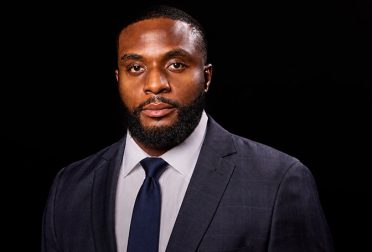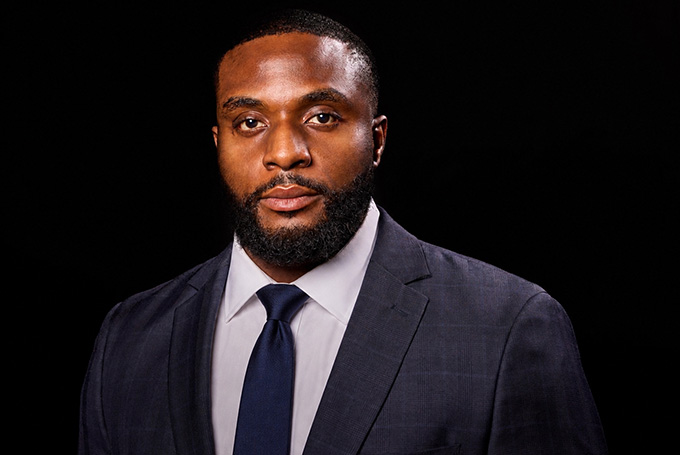
Theo Ude is a product realization team lead at Lawrence Livermore National Laboratory, working on nuclear deterrent technology for the U.S. Department of Energy. Several of his coworkers at the lab attended System Design and Management and spoke highly of the program. Theo started the graduate certificate program in the fall of 2025 and immediately saw the impact on his work. “I was shocked about how applicable the SDM curriculum was to my current role,” he says. “The real combination of project management with system architecture and systems engineering—that combined thinking is something that I found extremely valuable.” Eventually, he decided to take the leap and apply to the full master’s degree. Now that he’s completed the core class, Theo will be taking depth and foundation classes in engineering and management and preparing to write a thesis.
Why did you apply to the certificate program?
I wanted to enhance my ability to ideate, create, and lead at Lawrence Livermore. I’ve been a systems engineer, but I’ve never had a formalized education in systems thinking. I wanted to improve my ability to do what my current role was at the time and shift my mindset in how I approach challenging problems within the defense technology engineering division. As I look into the future, I also wanted to gain skills that will enhance and progress my career within the division and beyond to different industries outside of the government space.
How have you been able to incorporate what you’ve been learning in the core class into your day-to-day work?
During the year of the certificate program, I would go to lecture and learn something in class, and I would come into work and literally do what I just learned. It wasn’t just one time. That’s when it clicked for me that SDM offers very applicable lessons and skills. SDM teaches ideas that are not traditionally taught in most engineering programs, such as considering scope, schedule, and cost, outside of the fun technical aspects of a project. As engineers, we may take some engineering economics courses, but these are not courses that we dive into on a granular level. So going through the certificate program and applying it in a practical sense at my job definitely made my production value much higher now that I understood what I was doing better.
How did you make the choice to apply to the full master’s program?
A majority of my core team members were master’s students and they spoke very highly of the master’s program. They often mentioned how core is probably the most demanding part of the program and how I should consider looking into what else SDM has to offer. This made me really consider finishing the full degree. I felt that I already found so much value in just the core, so I became more curious about the full master’s program and applying what I learn to a meaningful thesis. The choice to transition was a bit tricky, but ultimately, I found it extremely valuable and very worth it.
I am very excited to continue with my SDM journey. There’s so much opportunity that I want to explore, especially here in the San Francisco Bay Area. Artificial intelligence, nuclear energy, and defense technology are all big industries here. There’s just so many complex problems out there, and I feel like I’ll be doing myself a disservice if I don’t get the full education to help solve them. Personally, I’m passionate about energy, I come from a country that is very lacking in sustainable energy. I want to make sure that I’m able to learn as much as I can, both in the nuclear energy space and other energy solutions, to be equipped to potentially help solve those problems. I knew core would give me a lot, but I wanted to push through, as well.
What are the other courses you’re looking forward to taking?
I’m interested in the business courses at Sloan like Managerial Finance. I have heard very good things about it and I tend to follow trades and stocks all day so it seems like a good fit. It’s a newer class, but I tentatively put Artificial Intelligence for Business in my academic plan as well, because I’m really interested to see how MIT is incorporating this brand new boom. I want to make sure that I’m up with the times. Incorporating that sweet spot between business and systems engineering, the systems mindset, essentially. I have the entrepreneurship 101 class on my academic plan as well, because my dad’s an entrepreneur and entrepreneurship is a big thing in my family. I think we’re always striving to have ownership of the business ideas that we have. I’m in startup world here in the Bay Area and having that skill set would be very good.
What are you looking forward to about being on campus or being in Cambridge?
Every time I’m on campus I always feel like I should stay longer. I grew up in Los Angeles and moved just up north to the San Francisco area, so I’ve always been in California. I like the environment in Cambridge and Boston, I like how everybody seems studious, the campus is beautiful. I like how interactive it is, you can kind of go anywhere. I find new things about it every day. Plus I recently became addicted to coffee, and Boston is great for that.