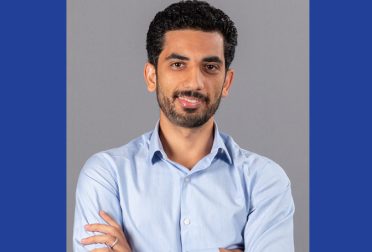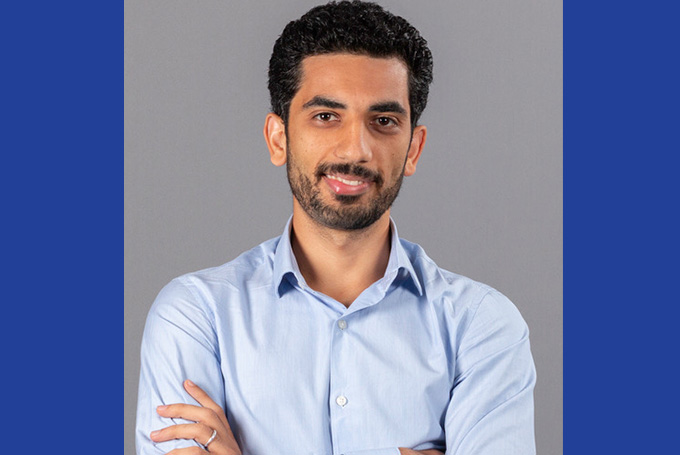
Abdelrahman Ayad had an early exposure to the importance of taking a systems approach to problem-solving. Participating in a robotics competition, he was intrigued by how students from different disciplines had to work on multiple tasks at the same time to engineer the robots for a common cause. While his undergraduate degree focused on software, he found similar complexity in the field of energy and earned a doctorate from McGill University focusing on the reliability and resilience of the power system. Currently Abdelrahman is a research engineer at the National Laboratory of the Rockies (NLR), formerly NREL, working on power systems planning. He’s looking forward to connecting with his fellow students this fall. “I’m really excited about learning what it means to apply systems in their fields,” he says. “I’ve tried to think about how can I apply it in my field, but I’m missing a lot of different angles where you can see how this can apply differently.”
What made you decide that it was time to pursue another degree?
I always knew that I wanted to stay in the technical field so an MBA was not the right path for me. Still, I felt that I needed some additional experience when it comes to managing projects of a larger scope, where I’m not only the technical lead, but also managing people and finances, and aware of how the economics play into funding new projects. SDM seemed like the perfect middle ground for all of these, combining engineering and management, so you stay in the technical field but also learn how to manage and lead these complex projects and go beyond the technical focus.
How do you think a systems approach will help you in your work?
The power grid is one of the most complex systems that requires a lot of different expertise to work on today. Conventionally, all of our different models and planning for the grid were done in silos, where transmission engineers didn’t coordinate or optimize their planning with the distribution engineers or the generations engineers. But the organizations that structure this power grid were also working in silos. So depending on where you are in the US or even in the world, you have a different organization controlling or managing a specific aspect that is not really communicating or organizing or optimizing across the interfaces. I think we need to think holistically more about how to bring a new architecture for this power grid. The current structure and markets and planning frameworks that we have will simply not solve today’s problems. With all the changes in the grid, trying to integrate new technologies and storage, meeting the growth from data centers, making the grid more dynamic and flexible, we need a systems approach more than ever.
What’s something that excites you about meeting your new classmates?
My understanding is you have all of these people coming from different backgrounds, but you need to make them talk in the same common language. So they have to abstract their work in a systems way, so then we can all think about it from a system perspective. And then, once we identify the design that we want and the problem we want to solve, then we go back and apply it into the field. I’m looking forward to learning from all the people who aren’t working in my field, but maybe have a perspective that we can use. And looking at the different backgrounds and profiles of the current class and previous classes, you see a very wide range. Someone who’s working in healthcare, working with a robotics engineer, working with a defense engineer, and working with an energy person, so all of these come together. Definitely something you don’t find in many programs.
What are you hoping to learn in the core class?
The core class is mainly about learning how to speak in this systems language. I think you need to see the system before you can actually try to model it, or fix it, or improve it. So I’m hoping to be able to see systems everywhere and in everything I tackle, and to think about the architecture of a given system before thinking about a specific design or a solution to the problem. Trying to always have this bigger picture in mind. And once I’m able to learn that skill, it’ll be easier for me to communicate the value of system thinking to people who are not really aware, or involved, or even convinced of the value. It’s one thing to understand system thinking and apply it, another thing to convince your manager or funders. I’m looking forward to being able to articulate the value to all stakeholders, and underline the importance of this approach.
Are there other courses you’re really interested in?
I’ve just started looking at the course catalog, and it’s been really difficult to choose which courses I want to take. Someone said it’s like being a kid in a candy store, and this definitely applies to me. But there are a few courses that I’m really interested in. The first one is Technology Roadmapping. I really liked Professor de Weck’s quantitative approach to developing these roadmaps, which is essential to planning out how we invest in future technologies. Especially working in a research lab where we try to bring the research that we work on to the market. So how can we develop a 20 years or a 50 years roadmap that is applicable for the public sector and the government? Another course is Systems Architecting Applied to Enterprises. How to think about an entire enterprise or organization as a system, and applying these concepts to not just lead the technical part, but the people as well.