By Stefanie Koperniak
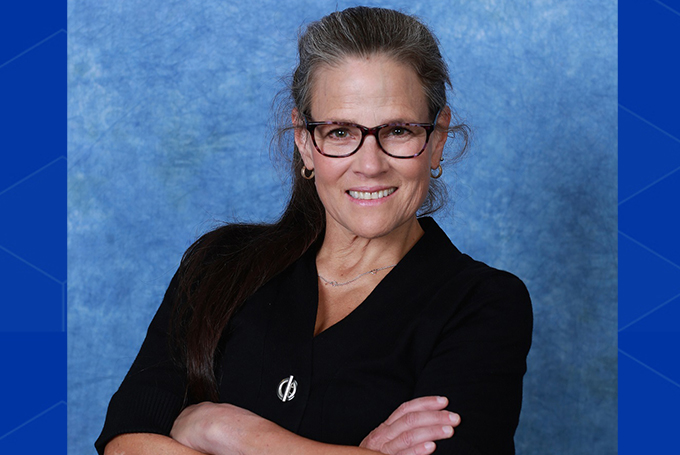
Currently a principal software development manager at Microsoft in the Cloud+AI division, Christine “Chris” Miyachi SDM ’01 recently gave the keynote at the IEEE International Conference on AI and Data Analytics (ICAD 2026) and serves as chair of the IEEE AI coalition. She previously worked in software engineering for 22 years at Xerox, which sponsored her time at SDM. Miyachi shares her insights as an SDM alum and her thoughts on how systems thinking shapes how she approaches working in AI.
What was your path to SDM? How was your experience in the program?
I was in one of the earliest cohorts of the SDM program. At Xerox, we were given half of our time off to do graduate work and we worked half-time, which was great. I absolutely loved SDM. The students were amazing and provided very interesting perspectives from different companies. The faculty were outstanding, as well—both those on the management side from Sloan and those from the School of Engineering. I’m really an engineer at heart, and one course that particularly stuck with me was Embodied Intelligence, taught by Rodney Brooks. It challenged us to think about whether machines can be “living” and what that means, and also what is involved in building intelligent systems. It was a fascinating course.
How did what you learned in SDM impact your career?
I was early on in my career at Xerox when I went to SDM. The program definitely enhanced my skills in engineering management, and I also began doing more software architecture. When I eventually started working at Nuance [which was shortly thereafter acquired by Microsoft], I became more immersed in AI, building on what I had learned in Embodied Intelligence and the three-term core course, Foundations of System Design and Management. I began working on a medical product that uses AI to create electronic medical records automatically from a doctor’s visit. It can really streamline the workload for doctors. As a software developer, I’m now looking at the best ways to apply AI in the spaces of health and life science.
How do your experiences in SDM affect the way you view and implement AI?
Systems thinking is truly more important now than ever. Software engineers and managers need to see the entire system in all of its complexity. Even though AI now generates a lot of code—and you can have other AI models reviewing and testing the code—you still need a human in the loop, reviewing the code and evaluating test results. If something goes wrong with an app or a system goes down, we need to know quickly what action to take. We can involve AI, but we need to understand it. It’s also important to consider the objectives of using AI, such as to eradicate the drudgery involved in a task, but not to eliminate the creative process altogether.
Looking at the bigger picture is something that SDM teaches you. It’s not just a bunch of classes and a thesis, but it is a life-changing program, making you think deeply about the work you’re doing.
Christine Miyachi has almost 30 years of experience working for startups and large corporations. Currently she is a Principal Software Engineering Manager in the Cloud+AI division at Microsoft where she works in the Health and Life Sciences division. She holds two MIT degrees: an SM in technology and policy/electrical engineering and computer science and an SM in System Design and Management. See more about Chris at www.christinemiyachi.com. Chris was the past Chair of IEEE Future Directions and currently leads the IEEE AI Coalition. She has run more than 30 marathons and just got her eight world marathon star medal in South Africa this year. https://www.linkedin.com/in/chris-miyachi-a31835